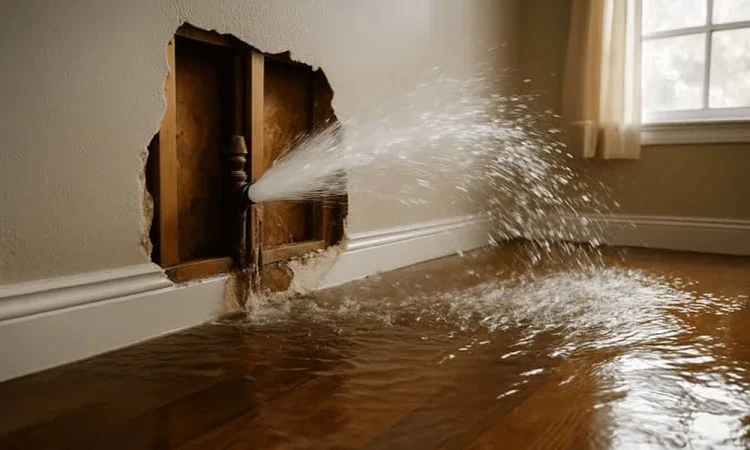
At 6:40 on a January morning, a pipe in an exterior wall on the top floor splits open. Nobody notices for almost an hour. By the time someone finds the shutoff valve, water is dripping from a light fixture two floors down and pooling on the basement slab.
That’s how water works in a house, especially in the older two-family homes, triple-deckers and condo buildings found in coastal New England towns. Water doesn’t stay where it starts. It follows gravity, framing and any gap it can find, and most of its path is hidden behind finished surfaces.
Anyone who has dealt with water damage restoration in Quincy knows that the stain you can see is usually the smallest part of the problem. A split supply line can release several gallons a minute, and an hour of that can reach every floor of a building. Understanding where it goes helps you ask better questions when the cleanup starts.
How Water Moves Once It Escapes
A pressurized supply line keeps running until someone closes a valve, which is why a burst pipe can do so much more damage than a slow drip. The water takes several routes at once.
Straight Down Through Floors
Subfloors made of plank or plywood soak up water quickly, but they can’t hold much. Once they’re full, water drips through nail holes, seams and gaps around pipes, then lands on the ceiling below. Drywall ceilings sag as they fill and may crack open or collapse. Plaster ceilings in older homes often look solid while the lath above them stays soaked.
Sideways Along Framing
Water runs along joists, wall plates and pipes before it drops. A leak in a back bedroom can show up as a stain in a front hallway, several feet from where it started. This is why patching only the stained spot rarely fixes the damage.
Under Flooring
Hardwood, laminate and floating vinyl planks trap water underneath. The surface may look dry within a day while the subfloor stays wet for weeks. Hardwood then cups, with edges higher than centers, and laminate swells at the seams.
Into Wall Cavities
Insulation inside exterior walls acts like a sponge. Wet fiberglass sags and loses its insulating value, and cellulose clumps and holds moisture against the wall sheathing. Neither one dries well while it’s sealed behind drywall.
Where Water Hides After the Mop Comes Out
Even after the floors look dry, moisture tends to settle in a few predictable places:
- The bottom of drywall, where it wicks water upward
- Behind baseboards and kitchen toe kicks
- Under bathroom and kitchen cabinets, especially on particleboard bases
- Between subfloor layers when old flooring was covered instead of removed
- Inside ceiling cavities above recessed lights
- Along sill plates and rim joists in the basement
Moisture meters and thermal cameras find these spots without opening every wall. A thorough assessment maps the wet areas room by room and floor by floor, which gives everyone a clear starting point for drying and insurance paperwork.
Not All Water Is the Same
Where the water came from changes how it’s cleaned up. A burst supply line starts out as clean water, but it doesn’t stay clean for long. As it soaks through dusty cavities, insulation and old flooring, it picks up contaminants. After a day or two of sitting, it can grow bacteria.
Water from a washing machine overflow or a dishwasher drain starts in a dirtier category. Sewage backups and flooding from outside are the most serious, because they carry bacteria and other contaminants that porous materials can’t safely keep. Carpet, padding and drywall touched by that kind of water usually have to be removed.
Mold Doesn’t Wait Long
Wet building materials can start growing mold within a day or two in a warm house, and winter heating keeps the inside warm. Mold damages what it grows on and spreads the longer moisture stays.
The EPA’s guidance on mold cleanup at home gives a simple rule. Small patches under about ten square feet can often be handled by the homeowner, while larger areas, or any mold after sewage or contaminated water, call for professional cleanup. It also warns against painting over moldy surfaces before they’re cleaned and dried.
Shared Buildings Add Another Layer
In a two-family home or condo building, one burst pipe can affect several households. The unit where the leak started may have only modest damage, while the unit below loses a ceiling, cabinets and flooring.
These situations go more smoothly when the people involved talk early. Each owner’s policy may cover different parts of the damage, and condo associations often carry a master policy for common elements. Photos taken before any cleanup, a written record of when the leak was found and moisture readings from each unit all help sort out who covers what.
Drying Is Measured, Not Guessed
Fans from the hardware store move air, but they don’t take moisture out of it. Proper drying uses dehumidifiers along with air movers aimed at wet surfaces, and the setup changes as materials dry. Some situations call for opening small holes at the bottom of walls so dry air can reach the cavity, or lifting part of a floor so the subfloor can breathe.
Drying is finished when the readings say it is, not when a set number of days has passed. Technicians compare wet materials against the same materials in a dry area of the house. Once the readings match, rebuilding can start. If rebuilding starts too soon, moisture gets sealed behind new paint and flooring, and the problems show up months later as peeling, warping or a musty smell.
Keeping the Next Leak Smaller
Most burst pipes happen in predictable spots: exterior walls, unheated crawlspaces, garages and pipes near drafty sill plates. Insulating those runs, sealing air leaks around them and keeping the heat steady during a cold snap lowers the risk a lot. On the coldest nights, opening the cabinet doors under sinks on exterior walls lets warm air reach the pipes.
Everyone in the house should know where the main water shutoff is and be able to turn it quickly. A sticky old gate valve that won’t close all the way is worth replacing with a ball valve before winter. Leak sensors under sinks, near water heaters and beside washing machines can alert you by phone. Automatic shutoff valves go further and close the main line when they detect a leak. Every minute saved before the water is off means less water in the floors and walls below.